
Sheryl Sandberg: It's all about people
Last week I was at the LSE to listen to a talk by Sheryl Sandberg, Facebook’s Chief Operating Officer. The talk was titled ‘It’s all about people’ and was based on the core premise that as a society we are moving from using the web for information retrieval to using it for social discovery, Facebook being somewhat at the core of this movement.
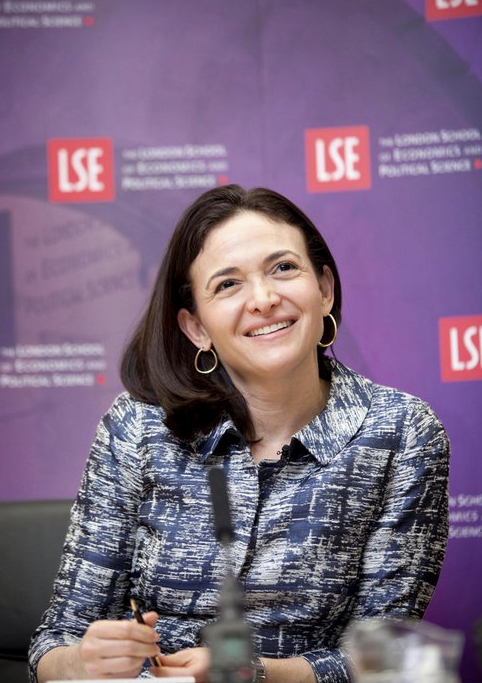
Photo credit: Maria Moore/LSE
The average Facebook user in the UK apparently spends 7 hours per month on the service. Facebook, as we all know, completely changed the way people communicate with each other, not just people we know but people we don’t know, by connecting them to us in ways we didn’t think of before. The Israel Trauma Centre had 8 Facebook groups where they posted pictures of people they were trying to save – and by giving a face to names or ‘making strangers visible’ as Sheryl said, they were able to achieve huge success. There’s a case study about it here, with a video below.
Facebook is also now used for create social change. She mentioned the case of Oscar Morales, an unemployed engineer in Colombia, who, frustrated with the actions of the Revolutionary Armed Forces of Colombia (FARC) used Facebook to rally 12 million people together in protest. More recently, Egypt’s Prime Minister Ahmed Shafiq resigned following the riots in the country. And the place he announced his resignation? The Facebook page of the Supreme Council of the Armed Forces of Egypt.
But at a much smaller level, the fact (which we all know) is that people are definitely influenced by what their friends do, and Facebook used this to encourage people to exercise their right to vote during the US general election, and the UK one as well by adding several new features.
At a brand level, people’s affiliations with brands are now becoming an increasing part of who they are online: there are 15 million friend connections every day and 50 million ‘likes’ of brand pages a day. Sheryl also mentioned a few brands who were using Facebook well: the Samsung Galaxy Tab campaign used Facebook to reach out to influencers’ networks, and in fashion, whole fashion shows are now streamed online, making a front-row seat at Milan Fashion Week accessible for you and me. Burberry was also mentioned as a brand that does the two-way conversation very well on Facebook, something that hardly anyone was doing a few years ago. But it’s not just big brands that are reaping the benefits. Last year, to back small businesses, American Express created Small Business Saturday on Facebook (to go up against the Black Friday phenomenon which is when big brands in the US see massive sales) – and this resulted in sales going up by 27% year-on-year for those small businesses.
Ultimately, Sheryl said it was about social design - about building products and services that keep people at the heart, give them a reason to share in a simple and fast way, while all the time giving them the privacy controls to make them feel comfortable and brands accountable.
An example of a Facebook product that is social by design is photos. Facebook Photos has more images than the top 3 photo sharing services combined because of one main reason: it allows you tag your friends in an environment that they inhabit.
Another one is the Groups feature: I was most amused to hear that in the US, high school girls now use Facebook (the ‘Don’t Steal my prom Dress’ Facebook groups!) to make sure that they can ‘claim’ their dress for the night by uploading a picture of it and tagging themselves – a hint that no one else should wear the same dress!
Social networks have an impact on healthcare too – we all know about Google Flu Trends, but last year, research using highly social (read connected) Harvard undergraduates as a sample set concluded that tracking a person’s social network can predict the spread of flu before the event, rather than after.
Overall, Sheryl Sandberg was a great person to listen to – she was extremely patient and took well over 20 questions at the end. Some of her answers were quite entertaining (‘we allow everyone at Facebook to use Facebook at work because we believe it is good for product development’; ‘Mark and I use Facebook messaging instead of email to contact each other’) and others insightful (‘we made a mistake with Beacon, but we firmly believe that despite people resisting News Feed in the beginning, it was the right thing to do – in fact today so many sites have a News Feed feature. People usually resist change, but no one can know in advance which way a new feature will go – Beacon or News Feed’ and ‘the way to deal with extensive growth and cultural transformation is to acknowledge it internally and talk about it being hard’.) With regard to how they view Google, she said that Facebook is very clear that search was not their mission. However they do make it easier to see the kinds of connections people are forging, for example via peace.facebook.com, which shows friend connections between people who live in areas of strife.
Facebook isn’t perfect, no doubt, but listening to their COO speak so honestly about how they work has made me view them less suspiciously.
There's a podcast of the talk here.